Motorized Shades in South Florida: Cost, Benefits & Smart Home Options
Motorized shades have become one of the most practical and sophisticated window treatment solutions for modern South Florida homes. With large windows, sliding glass doors, strong year-round sunlight, high ceilings, and an increasing interest in home automation, homeowners are looking for window treatments that provide more than privacy and decoration. They want convenience, precise light control, clean design, and technology that integrates naturally into everyday life.
Unlike traditional manual shades, motorized window shades use an integrated motor that allows the treatment to raise or lower without being operated by hand. Depending on the selected system, shades may be controlled using a remote, wall switch, mobile application, scheduled automation, or compatible smart home platform.
For South Florida homeowners, this technology can be particularly valuable. Automated shades can make it easier to manage intense sunlight throughout the day, reduce glare, protect interior finishes from prolonged direct exposure, provide privacy, and conveniently operate large or hard-to-reach windows.
However, not every motorized shade system is the same. Costs vary according to window dimensions, fabric, motor type, power source, controls, installation requirements, and smart home integration. The best solution should be selected according to both the architecture of the property and the homeowner’s lifestyle.
This complete guide explains motorized shades in South Florida, including how they work, their primary benefits, typical cost factors, battery-powered and hardwired options, smart home integration, fabric choices, installation requirements, and what homeowners should consider before investing in automated window treatments.
What Are Motorized Shades and How Do They Work?
Motorized shades are custom window treatments equipped with an electric motor that controls the movement of the shade. Instead of manually pulling a chain, cord, or handle, the homeowner activates the motor through a compatible control system.
The motor is typically integrated into the shade’s roller or operating mechanism, allowing the technology to remain visually discreet.
Depending on the system, a single shade can be controlled independently or several shades can be grouped together. This is particularly useful in rooms with multiple windows where manually opening and closing every treatment would be inconvenient.
Motorized shades can be created using different types of fabrics and materials. Homeowners may select solar fabrics for glare control, light-filtering materials for softer natural light, or room-darkening and blackout options for bedrooms and media spaces.
The result is a window treatment that combines the functionality of a custom shade with automated operation.
Motorized vs. Manual Window Shades
The most obvious difference between motorized and manual shades is how they are operated.
Manual shades require physical interaction with each window. This may be perfectly practical for a small number of standard-height windows, but it can become inconvenient in rooms containing several large shades.
Motorization becomes especially useful for tall windows, hard-to-reach openings, oversized treatments, and areas where furniture makes manual access difficult.
There is also a design difference. Many motorized configurations eliminate visible chains or cords, helping create a cleaner and more streamlined appearance.
For luxury interiors, this minimal aesthetic can be an important advantage.
Motorization also creates opportunities for automation that manual shades cannot provide. Depending on the selected technology and compatible smart home system, treatments may be incorporated into routines or schedules rather than requiring individual manual adjustments throughout the day.
Types of Motorized Shades
Motorization is available for several types of custom window treatments.
Motorized roller shades are among the most popular because they combine a clean appearance with straightforward operation. They are particularly well suited to contemporary homes and large architectural windows.
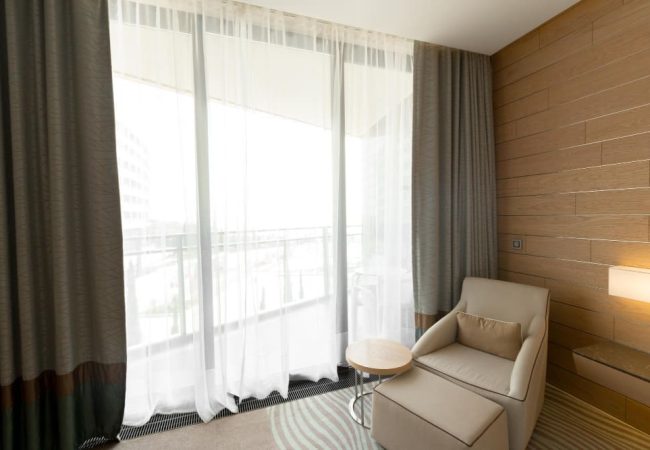
Motorized solar shades use performance fabrics designed to manage sunlight and glare while preserving varying degrees of exterior visibility. These can be particularly useful in South Florida living rooms, home offices, and waterfront properties.
Motorized blackout or room-darkening shades can provide convenient light control in bedrooms and media rooms.
Other treatment styles may also be available with motorization depending on the manufacturer, dimensions, fabric, and installation conditions.
The appropriate system should always be selected according to the individual window rather than assuming that every motor can support every treatment.
Benefits of Motorized Shades for South Florida Homes
Motorized window shades offer several benefits that are particularly relevant to South Florida living.
The region receives abundant sunlight throughout the year, and many homes are designed with expansive windows to take advantage of views and natural daylight.
While these architectural features are attractive, they can also create glare, privacy concerns, and significant direct sunlight during certain parts of the day.
Motorized shades make it easier to respond to these changing conditions.
Convenient Light and Glare Control
Sunlight changes throughout the day. A room that is comfortable in the morning may receive intense direct sunlight several hours later.
With manual shades, homeowners need to walk through the property and adjust each treatment individually.
Motorized shades make these adjustments significantly easier.
This can be particularly valuable in rooms containing multiple windows. A living area with four or six large shades can be adjusted more conveniently than operating every treatment by hand.
Home offices can also benefit from automated light control. Direct sunlight across a computer monitor can create glare even when the room itself remains comfortable.
The ability to quickly adjust the shades allows homeowners to maintain natural light while reducing distracting direct exposure.
Privacy at the Touch of a Button
Large windows and sliding glass doors are common in South Florida, but they can create privacy challenges.
During the day, homeowners may want treatments open to enjoy pool, garden, city, or waterfront views. In the evening, greater privacy may become a priority.
Motorization simplifies this transition.
Compatible shades can be lowered without manually visiting every window, which can be particularly convenient in open living spaces.
The fabric remains an important consideration. Solar shades that preserve daytime views may not provide complete nighttime privacy when interior lights are on.
Homeowners who require strong privacy should discuss fabric opacity and nighttime conditions during the design process.
Cleaner Interior Design
Motorized shades can complement minimalist and luxury interiors because their operating technology can remain visually discreet.
The absence of visible manual controls in many systems helps create a cleaner appearance around the window.
When shades are raised, they can allow architectural windows and exterior views to become the visual focus. When lowered, carefully selected fabrics can integrate naturally with surrounding walls and furnishings.
For homes where every architectural detail has been intentionally designed, this level of visual simplicity can make a significant difference.
How Much Do Motorized Shades Cost in South Florida?
The cost of motorized shades in South Florida varies significantly from one project to another.
There is no meaningful universal price per window because several components determine the final investment.
Window dimensions, shade style, fabric selection, motor manufacturer, power source, control system, installation conditions, and smart home integration can all affect pricing.
A standard-size motorized roller shade using a relatively straightforward fabric will have a different cost from an oversized automated shade covering a floor-to-ceiling window.
For this reason, homeowners should be cautious when using generic online prices to establish a final project budget.
Professional measurement and product selection are necessary to create an accurate quote.
Factors That Affect Motorized Shade Prices
Window size is one of the most important pricing factors.
Larger shades require more material and may require stronger motors or more substantial hardware. Oversized windows can also require specialized systems specifically engineered for their dimensions and weight.
Fabric selection affects pricing as well. Solar materials, decorative textiles, blackout fabrics, and premium collections have different costs.
The motor itself represents another part of the investment. Different motors offer different capabilities, power requirements, control options, noise levels, and compatibility with automation systems.
Installation conditions also matter.
A standard accessible window may be relatively straightforward to install, while a double-height opening or difficult architectural location may require additional labor or equipment.
Finally, smart home integration can influence the total project depending on the selected system and level of automation.
Is Motorization Worth the Additional Cost?
Whether motorization is worth the investment depends on how the homeowner uses the space.
For a single small window that is easy to reach and rarely adjusted, manual operation may provide everything the homeowner needs.
The value of motorization becomes more apparent with large windows, multiple shades, tall openings, and treatments that are adjusted frequently.
Homeowners should consider how many times they realistically expect to operate the treatments every day.
If several large shades need to be opened every morning, adjusted during periods of strong sunlight, and closed again for privacy each evening, automation can provide meaningful everyday convenience.
Motorization can also make window treatments more likely to be used as intended. A shade that is difficult to reach may remain in the same position for weeks. An automated treatment is much easier to adjust according to changing conditions.
Battery-Powered vs. Hardwired Motorized Shades
One of the most important technical decisions when planning motorized shades is how the motors will receive power.
The two common approaches are battery-powered and hardwired systems.
Each has advantages, and the appropriate choice depends on the property, project stage, accessibility, and selected motorization system.
Battery-Powered Motorized Shades
Battery-powered motorized shades can be particularly useful in existing homes.
Because they do not necessarily require new electrical wiring at every window, they can simplify installation in rooms that were not originally designed for automated window treatments.
Battery configurations vary according to the manufacturer and system. Some use replaceable batteries, while others may use rechargeable power solutions.
The homeowner should consider accessibility when selecting a battery-powered treatment. A battery system installed on an extremely high window still needs to be accessible when charging or maintenance is required.
Battery life can vary depending on the shade size, motor, frequency of operation, battery technology, and other factors.
For these reasons, homeowners should evaluate the specific system rather than assuming all battery-powered shades perform identically.
Hardwired Motorized Shades
Hardwired motorized shades receive power through the home’s electrical system.
This can be an attractive solution for new construction, major renovations, and luxury projects where electrical infrastructure can be planned before walls and ceilings are completed.
Hardwiring eliminates routine battery charging or replacement, which can be especially beneficial for large numbers of shades or difficult-to-reach windows.
However, proper planning is essential.
Electrical requirements need to be coordinated with the selected motorization system. Power locations, wiring, controls, recessed pockets, and access requirements may need to be established before construction is finished.
Homeowners planning a new property or major renovation should therefore discuss window treatments relatively early rather than waiting until the final decorating stage.
Smart Home Integration for Motorized Shades
Smart home technology can expand the functionality of motorized window treatments beyond basic remote operation.
Depending on the motor, controller, and automation platform, shades may be incorporated into a broader home control system.
Compatibility varies significantly between manufacturers and systems, so homeowners should verify integration requirements before purchasing.
App, Remote and Wall Control Options
Motorized shades can typically be operated through one or more control methods depending on the selected system.
Remote controls provide a simple way to operate individual shades or groups of treatments.
Wall controls can create a more permanent interface that feels similar to operating lighting.
Some systems offer mobile application control, allowing compatible shades to be managed from a smartphone or tablet.
The ideal control strategy depends on the household.
A sophisticated system does not necessarily need to be complicated. For many homeowners, the best solution combines straightforward everyday controls with additional automation features available when needed.
Smart Home Automation and Scheduling
Compatible motorized shades may be incorporated into scheduled routines or smart home scenes.
For example, homeowners may choose to have certain treatments adjust according to their daily routines or preferred times.
A morning routine could open selected shades, while an evening routine could lower them for privacy.
Automation can also be coordinated with other compatible smart home components depending on the platform and installation.
However, integration should be planned carefully.
Homeowners should identify the smart home system already used in the property and confirm that the selected window treatment technology is compatible.
This is particularly important in luxury homes containing professionally installed automation systems.
Motorized Solar Shades for South Florida Sunlight
Solar shades are one of the most practical motorized window treatment options for South Florida homes.
Their fabrics are designed to manage glare and solar exposure while maintaining varying degrees of exterior visibility.
This makes them especially appropriate for rooms where homeowners want protection from intense sunlight without completely sacrificing outdoor views.
Understanding Solar Shade Openness
Solar shade fabrics are available with different openness factors.
The openness of the material affects the relationship between visibility, light filtration, and glare control.
A more open fabric generally provides greater exterior visibility, while a tighter weave generally provides stronger coverage.
There is no single openness factor that is ideal for every window.
Orientation, sunlight intensity, exterior views, interior colors, and privacy requirements should all influence the selection.
This is why evaluating fabric samples in the actual room can be valuable.
Solar Shades for Waterfront and Luxury Homes
Waterfront properties often present a specific challenge.
The view may be one of the most important features of the home, so completely covering the windows during daylight hours may be undesirable.
At the same time, sunlight reflecting from water can create significant glare.
A carefully selected solar shade can help balance these priorities.
Motorization makes the solution even more convenient because homeowners can adjust multiple shades as sunlight conditions change without permanently obstructing the view.
Motorized Blackout Shades for Bedrooms
Bedrooms require different window treatment priorities from living spaces.
Privacy and light control are often more important than preserving a daytime view.
Motorized room-darkening or blackout shades can make it easier to create a comfortable sleeping environment while maintaining convenient operation.
Blackout Fabric vs. Complete Room Darkening
Homeowners should understand the distinction between blackout material and a completely dark room.
A blackout fabric may prevent light from passing directly through the material, but light can still enter around the edges of the shade.
The amount of light leakage depends on the mounting configuration, window architecture, and treatment design.
Homeowners who want stronger room darkening should discuss side gaps and installation options during the planning process.
Layering blackout shades with custom drapery can provide additional coverage and create a more luxurious finished appearance.
Automated Shades for Morning and Evening Routines
Motorization can be particularly convenient in bedrooms because the treatments are typically operated at predictable times.
Compatible systems may allow homeowners to incorporate shades into morning and evening routines.
Instead of manually opening several treatments after waking, automated shades can simplify the process.
In the evening, the same system can make it easier to establish privacy across multiple windows.
Motorized Shades for Large Windows and Sliding Glass Doors
Large architectural openings are among the strongest reasons to consider motorization.
Oversized windows can create beautiful interiors, but manual treatments may become heavy or difficult to operate.
Motorized systems can make these treatments significantly more practical.
Motorized Shades for Floor-to-Ceiling Windows
Floor-to-ceiling windows require specialized planning because the dimensions of the shade affect fabric selection, hardware, and motor requirements.
Not every system can accommodate every window size.
Professional measurement allows the treatment specialist to determine whether a single shade can cover the opening or whether multiple coordinated shades may provide better performance.
High windows also make motorization particularly useful because manual controls may be difficult or impossible to reach comfortably.
Automated Treatments for Sliding Glass Doors
Sliding glass doors connect many South Florida homes with patios, balconies, pools, and outdoor living spaces.
Depending on the architecture, motorized shades or motorized drapery may be appropriate.
The treatment needs to provide coverage without interfering with everyday access.
Door direction, opening frequency, available stacking space, furniture placement, and ceiling conditions should all be considered.
For large openings, the convenience of automated operation can become an important part of everyday living.
Do Motorized Shades Help Protect Furniture and Interiors?
Strong sunlight can affect certain interior materials over time.
Flooring, furniture, artwork, wallpaper, textiles, and other finishes may respond differently to prolonged sunlight and UV exposure.
Window treatments can help reduce direct exposure, although homeowners should not assume that every shade provides complete UV protection.
Performance varies according to the selected fabric and product specifications.
Managing Direct Sun Exposure
The practical advantage of motorization is that homeowners can adjust shades more consistently.
A manually operated treatment only provides protection when someone remembers to close it.
An automated system can make it easier to respond to periods of strong sunlight.
This can be particularly useful in rooms where direct sun enters at approximately the same time each day.
Protecting Luxury Interior Finishes
South Florida homes may contain substantial investments in custom furniture, hardwood flooring, artwork, wallpaper, rugs, and other interior finishes.
Window treatment planning should therefore be considered as part of the broader interior design process.
The appropriate shade can help manage direct sunlight while preserving the visual character of the room.
Homeowners with specific concerns about valuable materials should review the performance specifications of the selected window treatment rather than relying on general assumptions about UV protection.
Motorized Shades and Custom Drapery
Choosing motorized shades does not mean homeowners need to eliminate traditional fabric drapery.
In fact, combining automated shades with custom drapery can create one of the most versatile window treatment solutions.
The shade provides functional light control, while the drapery contributes texture, softness, and architectural scale.
Layering Motorized Shades With Drapery
A motorized roller or blackout shade can be installed behind custom drapery.
During the day, the shade can remain raised while the drapery frames the window.
When sunlight or privacy requires additional coverage, the shade can be lowered without changing the decorative appearance of the room.
This approach works particularly well in bedrooms, formal living rooms, dining rooms, and spaces where functionality and interior design are equally important.
Motorized Drapery as an Alternative
Drapery itself can also be motorized.
Motorized tracks allow fabric panels to open and close automatically, which can be particularly useful for large sliding glass doors and floor-to-ceiling installations.
Whether motorized shades or motorized drapery are more appropriate depends on the desired aesthetic and functionality.
Some luxury projects combine both systems to provide multiple levels of light control and privacy.
Planning Motorized Shades During a Home Renovation
Window treatments are often considered late in the design process, but motorized systems benefit from earlier planning.
This is especially true during new construction and substantial renovations.
Architects, designers, builders, electricians, automation specialists, and window treatment professionals may all need to coordinate certain details.
Recessed Pockets and Concealed Hardware
Recessed shade pockets can conceal rollers and hardware within architectural elements, creating a very clean appearance.
However, these details need to be properly sized and planned.
Waiting until construction is complete can make it difficult or expensive to add certain concealed configurations.
Homeowners interested in this aesthetic should discuss window treatments before ceilings and surrounding architectural details are finalized.
Electrical Planning for Automated Shades
Hardwired shades require appropriate electrical planning.
The exact requirements depend on the selected system, which is why the product and motorization strategy should ideally be identified before electrical work is completed.
Planning early can help reduce visible wiring and unnecessary modifications later.
Even homeowners choosing battery-powered systems should consider future accessibility for charging and maintenance.
How to Choose Motorized Shades for Your South Florida Home
Selecting motorized shades involves more than choosing a motor.
Homeowners need to determine what they want the treatment to accomplish.
Is the primary objective glare reduction, privacy, room darkening, view preservation, convenience, or integration with a smart home system?
The answer helps determine the appropriate fabric and operating system.
Choose the Right Fabric First
Technology should not overshadow the importance of fabric selection.
A sophisticated motor cannot compensate for a material that does not provide the required privacy or light control.
Homeowners should evaluate solar exposure, opacity, exterior visibility, texture, color, and design.
Bedrooms may require blackout or room-darkening fabrics, while living areas may benefit from solar or light-filtering materials.
The fabric should also complement the interior design when the shade is lowered.
Select the Right Motorization System
After identifying the functional and design requirements, homeowners can evaluate motorization options.
Important considerations include shade dimensions, motor capacity, power source, controls, automation requirements, noise preferences, and smart home compatibility.
The goal is not necessarily to choose the system with the largest number of features.
The best motorized window treatment is one that operates reliably and naturally fits the way the homeowner uses the property.
Why Professional Measurement and Installation Matter
Motorized shades combine custom fabrication, mechanical components, electronics, and architectural installation.
Precise measurements are therefore critical.
An incorrectly measured treatment may not fit the opening properly, while poor installation can affect alignment and operation.
Professional Measurement for Large Shades
Large shades require particular precision.
The installer needs to consider width, height, mounting conditions, surrounding architecture, fabric limitations, and hardware requirements.
Some large openings may be better served by multiple coordinated shades rather than one oversized treatment.
A professional can evaluate these factors before products are ordered.
Professional Motorized Shade Installation
Installation involves more than attaching brackets to the wall.
The shade needs to be level and properly aligned. Motors and controls need to operate correctly. Power requirements need to be addressed according to the selected system.
For smart home projects, additional configuration may also be required.
Professional installation helps ensure that the technology remains discreet and the final treatment feels integrated with the architecture.
Choosing a Motorized Shade Company in South Florida
Homeowners searching for motorized shades in South Florida should evaluate both design expertise and technical experience.
A company should be able to discuss fabric, light control, privacy, dimensions, motorization, power options, and installation rather than focusing exclusively on technology.
The best project begins with understanding the home.
Questions to Ask Before Buying Motorized Shades
Ask which motorized systems are appropriate for the dimensions of your windows.
Discuss battery-powered and hardwired options and determine which configuration makes sense for the property.
If smart home integration is important, identify the existing automation platform and verify compatibility before purchasing.
Ask about fabric performance, particularly when privacy, blackout capability, glare reduction, or exterior visibility is a priority.
Homeowners should also understand who will measure and install the treatments.
Why a Turnkey Approach Is Valuable
A motorized window treatment project involves several interconnected decisions.
Fabric affects light control. Window dimensions affect motor requirements. Power availability affects the system. Architecture affects mounting and hardware.
Treating these decisions separately can create unnecessary complications.
A turnkey approach connects design, measurement, product selection, motorization, and installation from the beginning.
Motorized Shades in South Florida With Dream Wall Studio
Motorized shades can provide a sophisticated combination of technology, design, and everyday convenience for South Florida homeowners.
They can make it easier to manage intense sunlight, reduce glare, create privacy, operate large windows, and integrate window treatments into a modern lifestyle.
The best solution depends on the individual property. Solar shades may be appropriate for a waterfront living room where preserving the view is important. Blackout treatments may be preferred in a primary bedroom. Hardwired motorization may be ideal during new construction, while battery-powered systems can provide flexibility in an existing home.
Dream Wall Studio provides bespoke custom window treatments with an emphasis on personalized guidance, careful material selection, precise measurements, and professional installation.
With nearly seven years of experience in the luxury wallpaper and window treatment industry, Dream Wall Studio approaches each project according to the architecture, natural light, privacy requirements, interior design, and lifestyle of the homeowner.
The company works with a handpicked circle of specialized installation professionals with more than eleven years of experience in custom window treatments and wallpapering, helping create a seamless and carefully managed experience from initial design through installation.
Whether you are considering motorized roller shades, solar shades, blackout treatments, automated drapery, or a layered combination of shades and custom fabric, professional planning can help ensure that the final system provides the functionality and appearance your home requires.
For homeowners searching for motorized shades in South Florida, Dream Wall Studio offers a personalized approach to creating automated window treatments that feel naturally integrated into the home rather than added as an afterthought.